
LBC Lighting: Modern Lighting for Home & Commercial Spaces
Explore LBC Lighting for chandeliers, pendant lights, track and rail systems, LED linear lighting, outdoor fixtures, and other lighting solutions for residential, commercial, and architectural projects. With a broad selection of lighting styles and technical solutions, LBC Lighting makes it easier to find fixtures for everything from a dining room or kitchen to a restaurant, retail space, office, or outdoor area.
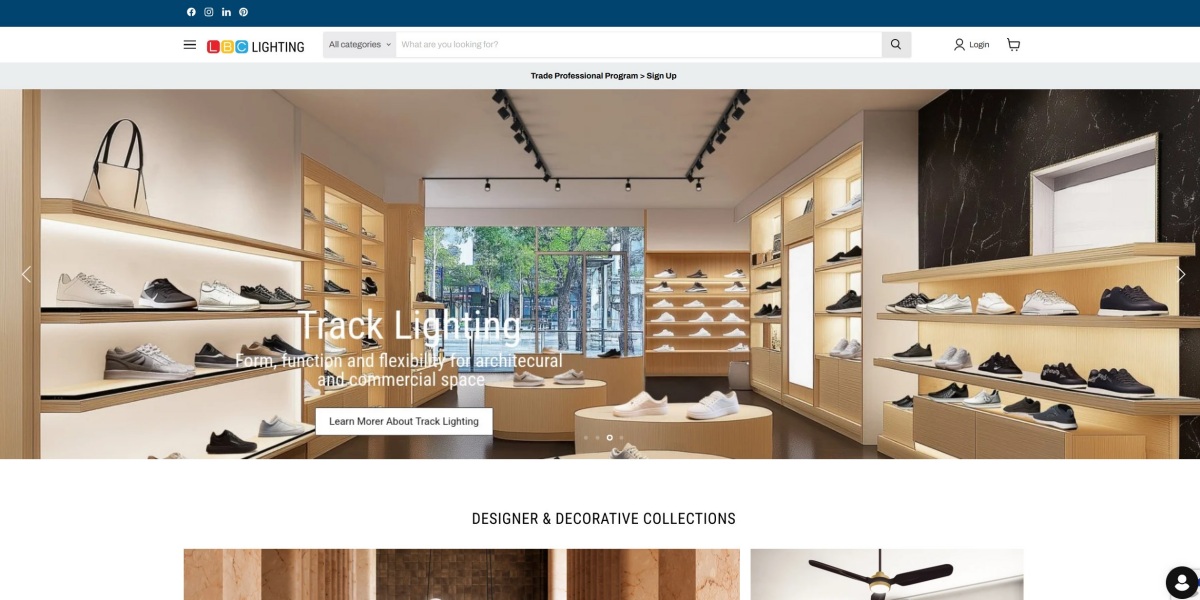
Some links may earn us a commission.
Create the Right Lighting for Every Space
Lighting can influence how a room looks, how it functions, and how comfortable it feels. LBC Lighting brings together decorative fixtures and more technical lighting systems, giving homeowners, designers, contractors, and businesses a wide range of options for different projects. From statement chandeliers and pendant fixtures to adjustable track systems and LED linear lighting, the selection can support both visual design and practical illumination.
Shop LBC Lighting by Category
Chandeliers
Explore statement chandeliers in contemporary, traditional, modern, and decorative styles for residential and commercial spaces.
Pendant Lights
Find pendant lighting for kitchens, dining areas, entryways, restaurants, offices, islands, and other spaces.
Track & Rail Lighting
Discover flexible track and rail components for directional lighting, accent illumination, retail spaces, and architectural projects.
LED Linear Lighting
Explore linear LED solutions for clean architectural lines, commercial environments, accent lighting, and larger installations.
Outdoor Lighting
Browse outdoor fixtures designed for patios, entrances, architectural exteriors, landscapes, and other exterior spaces.
Outdoor Track Lighting
Find adjustable outdoor track lighting for patios, walkways, architectural details, landscape features, and exterior projects.
Pendant Kits
Explore pendant and suspension components that can help create customized lighting arrangements and installations.
Track Lighting
Shop adjustable track fixtures, systems, heads, connectors, and accessories for flexible directional lighting.
About LBC Lighting
LBC Lighting is an online lighting retailer serving both residential and commercial lighting projects. Its catalog covers a broad range of decorative fixtures, architectural lighting, LED systems, outdoor products, fans, controls, and related components. This makes the store useful for shoppers who are looking for a single decorative fixture as well as customers working on larger lighting projects that require multiple types of products.
One of the useful characteristics of a large lighting catalog is the ability to shop according to the requirements of a particular space. A dining room may need a decorative chandelier or pendant, while a retail store may require adjustable track heads and a flexible rail system. A kitchen can combine pendants with recessed or under-cabinet lighting, while an outdoor entertainment area may benefit from weather-resistant fixtures and directional illumination.
LBC Lighting also serves customers interested in commercial and architectural applications. Lighting requirements in restaurants, offices, stores, hospitality environments, and other commercial spaces can be different from those in a typical home. The fixture needs to fit the visual concept of the space while also providing the right type of illumination for the task.
The result is a catalog that can be approached from several directions. You can begin with the type of fixture you want, the room or application you are working on, the desired style, or the technical characteristics of the lighting system. This flexibility is particularly useful when the exact product has not yet been selected.
Chandeliers for Statement Lighting
Chandeliers remain one of the most recognizable ways to create a visual focal point in a room. Instead of simply providing illumination, a chandelier can become part of the overall interior design. Size, shape, finish, number of lights, and overall construction can all influence the character of the installation.
LBC Lighting offers a wide range of chandelier styles, including contemporary and modern designs as well as more traditional and decorative options. Shoppers can also find LED chandeliers and multi-light designs that are suitable for larger rooms where the lighting fixture needs to make a stronger visual impression.
Choosing a Chandelier
Room proportions should be considered before selecting a chandelier. A fixture that is too small can disappear visually in a large room, while a very large chandelier may overwhelm a compact space. Ceiling height is another important consideration, particularly in dining rooms, entryways, stairwells, and rooms where people will be walking underneath the fixture.
The location also matters. A chandelier over a dining table can provide a decorative centerpiece while helping define the dining area. In an entryway, a larger fixture can create an immediate visual statement. In commercial interiors, a carefully selected chandelier can reinforce the design language of a restaurant, hotel, lounge, or retail environment.
Pendant Lights for Kitchens, Dining Areas and More
Pendant lighting is one of the most versatile categories in modern lighting. A pendant can be used as a single fixture, installed in a group, positioned above a kitchen island, suspended over a dining table, or used to add decorative lighting to an entryway or commercial interior.
One of the advantages of pendant lighting is the variety of available forms. Pendants can range from compact single-light fixtures to larger linear and multi-light designs. Materials, finishes, shades, dimensions, and color temperatures can all change the appearance and function of the final installation.
For kitchen islands, multiple pendants can create an even visual rhythm while providing focused illumination over the work area. In a dining room, a larger pendant or linear pendant can provide a strong centerpiece. Restaurants and hospitality spaces can use clusters of pendants to reinforce the identity of a dining area or bar.
When selecting pendants, consider the height of the ceiling, the size of the surface below the fixture, and the amount of illumination required. The relationship between the fixture and surrounding furniture is also important. A large pendant can work well above a long table, while several smaller fixtures may be better suited to a compact island.
Design tip: Pendant lighting does not have to be used alone. Combining pendants with recessed, linear, wall, or under-cabinet lighting can create layers of illumination that make a room more flexible throughout the day.
Track & Rail Lighting for Flexible Illumination
Track and rail lighting is particularly useful when the direction of light needs to be adjusted. Instead of having every fixture permanently fixed to one position, track systems can allow individual heads to be aimed toward artwork, merchandise, architectural details, work surfaces, seating areas, or other points of interest.
This makes track lighting useful across a wide variety of environments. Homes can use track systems in kitchens, living rooms, hallways, home offices, and other spaces where directional illumination is useful. Commercial environments such as retail stores, galleries, restaurants, studios, and showrooms can benefit from the ability to direct light toward changing displays or important architectural features.
A track system normally consists of more than just the visible light fixture. Depending on the design, components can include the track rail, track heads, power feeds, connectors, end components, adapters, and other accessories. Understanding the complete system is important before purchasing individual parts.
Why Track Lighting Is Flexible
One of the main benefits of track lighting is adaptability. If the layout of a room changes, individual heads can often be repositioned to direct light toward a different area. This can be particularly valuable in retail and commercial environments where displays and furniture may change over time.
Different track configurations can also support different design goals. Straight runs provide a clean architectural appearance, while more complex layouts can help cover multiple areas within one room. Track pendants and other accessories can add further possibilities to a system.
LED Linear Lighting for Modern Projects
Linear LED lighting has become an important option for contemporary architectural and commercial interiors. Its elongated form makes it possible to create continuous-looking lines of illumination while maintaining a clean visual appearance.
Linear systems can be used in offices, retail environments, hospitality spaces, kitchens, corridors, architectural installations, and many other applications. Depending on the system, linear lighting can provide general illumination, accent lighting, task lighting, or a decorative architectural element.
One of the reasons linear lighting is attractive for modern projects is its ability to integrate with architectural forms. Long fixtures can follow the proportions of a room, emphasize a ceiling, define a pathway, or create a visual connection between different areas.
When evaluating LED linear lighting, look beyond the appearance of the fixture. Important considerations can include color temperature, lumen output, color rendering, dimming compatibility, dimensions, mounting method, power requirements, and the intended environment. For commercial installations, additional requirements may also influence the selection process.
Linear LED products can be especially effective when a project requires a consistent lighting language across several areas. Instead of choosing completely different fixture types for each space, a coordinated linear system can help create visual continuity.
Outdoor Lighting for Exterior Spaces
Outdoor lighting has both functional and decorative roles. Exterior fixtures can help illuminate entrances, patios, pathways, architectural elements, landscape features, and entertainment areas while contributing to the overall appearance of a property.
LBC Lighting offers outdoor lighting categories that can be used for different exterior applications. Depending on the project, shoppers can consider wall-mounted fixtures, ceiling-mounted products, pendants, landscape lighting, accent lighting, and other exterior solutions.
When choosing outdoor lighting, the environment is particularly important. Fixtures should be selected according to their intended location and the environmental conditions they are designed to handle. Moisture exposure, mounting position, temperature, and local electrical requirements can all influence the appropriate product.
Outdoor Lighting for Patios and Entertaining Areas
A patio or covered outdoor living area often benefits from a combination of ambient and focused lighting. Wall fixtures can provide illumination around the perimeter, while pendants or ceiling fixtures can illuminate dining areas. Directional lighting can highlight architectural features or landscaping.
The goal is not necessarily to make every part of an outdoor space equally bright. A layered approach can create different zones and allow the lighting to support dining, conversation, entertaining, or relaxation.
Outdoor Lighting for Architecture and Landscaping
Exterior lighting can also emphasize the architecture of a building. Wall-mounted fixtures can highlight textures and entrances, while landscape fixtures can draw attention to trees, pathways, garden features, or other elements around the property.
Outdoor Track Lighting
Outdoor track lighting combines the directional flexibility of track systems with applications in exterior environments. It can be useful when specific areas need focused or adjustable illumination rather than a single fixed source.
Potential applications include patios, covered walkways, architectural features, columns, outdoor commercial spaces, and other areas where adjustable light can provide both practical and visual benefits.
Outdoor track systems require additional attention to environmental suitability compared with indoor lighting. Weather exposure, moisture, corrosion resistance, mounting conditions, and electrical specifications should all be considered before installation.
A well-designed outdoor track installation can also provide flexibility when the use of an outdoor area changes. Individual fixtures may be aimed toward seating, plants, artwork, signage, architectural details, or other features without requiring a completely new lighting layout.
Pendant Kits and Lighting Components
Lighting projects sometimes require more than a complete fixture. Pendant kits and other components can help create or complete an installation, particularly when a project involves a track system, suspension arrangement, or customized lighting configuration.
Pendant kits can be useful when the installation requires a specific suspension height or when a pendant needs to work with a larger lighting system. The exact components required depend on the fixture and the electrical and mounting configuration.
Before purchasing individual components, check compatibility with the lighting system and fixture you intend to use. Factors such as voltage, track type, mounting method, weight capacity, dimensions, and connection type can be important.
For larger projects, it can be useful to plan the complete lighting system before ordering individual components. This helps avoid situations where a fixture is purchased first and compatible hardware has to be sourced later.
How to Choose the Right Lighting
Choosing lighting is easier when the project is considered as a whole rather than starting with a single attractive fixture. The right product depends on the purpose of the space, the amount of light required, the dimensions of the room, the desired atmosphere, and the technical requirements of the installation.
1. Start With the Purpose of the Space
Consider what activities will take place in the area. A dining room may prioritize comfortable ambient lighting, while a kitchen may need brighter task illumination. A retail store may require directional lighting for products, while a hallway may need lower-level general illumination.
2. Decide Between Decorative and Architectural Lighting
Decorative fixtures are often selected partly for their visual impact. Chandeliers and pendants can become important design elements in a room. Architectural lighting generally places more emphasis on integration, performance, flexibility, and how the light interacts with the architecture.
Many projects use both approaches. A restaurant, for example, might combine decorative pendants over tables with recessed lighting and architectural accent lighting elsewhere in the space.
3. Consider the Size of the Room
Fixture proportions should relate to the space. Large rooms may require multiple fixtures or larger systems, while compact rooms can benefit from smaller fixtures or integrated lighting. Ceiling height is also important, particularly for suspended fixtures.
4. Think About Color Temperature
Color temperature affects the appearance of illuminated surfaces and the overall atmosphere of a space. Warmer light is commonly associated with relaxing residential and hospitality environments, while neutral or cooler options can be useful where a brighter and more task-oriented appearance is desired.
5. Consider Dimming and Controls
Lighting controls can make a room considerably more flexible. A dining area may need brighter illumination during preparation and lower levels during dinner. A retail environment may require different lighting scenes for normal operation and special displays. Before purchasing, verify that the fixture and control system are compatible.
6. Check Installation Requirements
Lighting products can have very different installation requirements. Some fixtures are relatively straightforward replacements, while track systems, recessed lighting, architectural systems, and larger commercial installations can require detailed planning and professional installation.
Lighting for Residential Projects
Residential lighting often works best when several layers are combined. General illumination provides overall visibility, task lighting supports specific activities, and accent or decorative lighting adds visual interest.
In a kitchen, for example, pendant lights can create a visual feature above an island while recessed or linear lighting provides broader illumination. Under-cabinet lighting can add another layer for food preparation and work surfaces.
Living rooms can combine ceiling fixtures, wall lighting, floor or table lamps, and accent lighting. Dining rooms can use a chandelier or pendant as the primary visual element, with additional lighting providing flexibility.
Bedrooms generally benefit from comfortable, controlled illumination rather than excessive brightness. Bathrooms require careful consideration of fixture location and electrical safety requirements. Outdoor living spaces can use several fixture types to create distinct areas for dining, pathways, and relaxation.
Lighting for Restaurants and Hospitality
Restaurant lighting has to balance atmosphere and functionality. Guests need comfortable illumination at tables, while staff need adequate visibility for service and operational tasks. Lighting can also contribute significantly to the identity of a restaurant.
Pendant lights and chandeliers can establish the visual character of dining areas. Recessed lighting can provide more discreet general illumination, while wall lighting and accent fixtures can emphasize architectural features.
Outdoor dining areas introduce another set of requirements. Exterior fixtures need to be appropriate for their environment, and directional lighting can help define tables, pathways, landscaping, and architectural details.
Restaurants may also benefit from lighting controls because the desired atmosphere can change throughout the day. Bright daytime lighting, evening ambient lighting, and special event settings can all require different lighting levels.
Lighting for Offices and Commercial Spaces
Office lighting needs to support productivity while maintaining a comfortable environment. Depending on the space, linear LED systems, recessed fixtures, track lighting, and architectural products can all play a role.
Retail environments often require more directional control. Track lighting can be particularly useful because individual fixtures can be aimed toward merchandise, displays, signage, or architectural elements. As store layouts change, adjustable lighting can provide additional flexibility.
Showrooms and galleries may have similar requirements. Lighting can be used to draw attention to specific products or displays while allowing other areas to remain more visually subdued.
Commercial projects should also pay close attention to applicable electrical codes, product ratings, controls, energy requirements, and installation specifications. For larger projects, working with a qualified lighting professional or electrician can help ensure that the selected products are appropriate for the intended application.
Why LED Lighting Is Important
LED technology has become a major part of modern lighting because it allows manufacturers to create compact, efficient, and versatile fixtures. LED products are available in decorative fixtures, recessed lighting, track heads, linear systems, outdoor products, tape lighting, and many other formats.
Another advantage is the range of design possibilities. LEDs can be integrated into thin linear profiles, compact recessed housings, decorative pendants, architectural systems, and adjustable fixtures. This allows lighting designers to focus on both the quality of illumination and the visual appearance of the fixture.
When comparing LED products, wattage alone should not determine the choice. Lumens, color temperature, color rendering, beam angle, dimming compatibility, expected application, and product dimensions can all be relevant.
Planning a Complete Lighting Project
For a larger project, it can help to divide the lighting plan into zones. Start by identifying the areas that require general illumination, then determine where task lighting is necessary. After that, consider decorative fixtures and accent lighting.
For example, a modern restaurant could use recessed lighting for general illumination, pendant fixtures above tables, track lighting for displays, wall fixtures for decorative accents, and outdoor lighting for a patio. A home renovation might use pendants over an island, recessed lighting throughout the kitchen, under-cabinet lighting for work surfaces, and decorative fixtures over the dining area.
This layered approach also makes it easier to control the atmosphere. Instead of switching every light on at the same intensity, different lighting groups can be controlled independently.
What to Look For
- Fixture size and proportions
- Light output and beam distribution
- Color temperature
- Color rendering requirements
- Dimming and control compatibility
- Indoor or outdoor suitability
- Mounting and installation requirements
- Compatibility between system components
Before You Order
- Measure the installation area carefully
- Check ceiling height and fixture dimensions
- Confirm voltage and electrical requirements
- Review mounting requirements
- Check whether additional components are required
- Verify dimming compatibility
- Check outdoor ratings where applicable
- Consider professional installation for complex projects
Finding the Right LBC Lighting Category
With a large lighting catalog, starting with the right category can save time. If the goal is to create a decorative focal point, chandeliers or pendant lights are natural places to begin. If the project requires adjustable directional lighting, track and rail systems may be more appropriate.
Linear LED lighting is worth exploring when the project calls for a modern architectural appearance or continuous illumination. Outdoor lighting is the better starting point for exterior applications, while outdoor track lighting can be useful when directional flexibility is required.
Pendant kits and other components are particularly relevant when a project involves a customized installation or a lighting system that requires additional mounting or suspension hardware.
Starting with the application rather than simply browsing random products can make the shopping process more efficient. Once the general fixture type has been identified, filters for size, style, finish, material, price, brand, color temperature, and other specifications can help narrow the selection.
Frequently Asked Questions About LBC Lighting
What types of lighting can I find at LBC Lighting?
LBC Lighting offers a broad selection of lighting categories, including chandeliers, pendant lights, track and rail lighting, LED linear lighting, outdoor lighting, recessed lighting, wall fixtures, landscape lighting, lighting controls, fans, and related components.
Does LBC Lighting offer both residential and commercial lighting?
Yes. The catalog includes products suited to residential spaces as well as commercial and architectural applications. The appropriate fixture depends on the project, installation environment, required performance, and applicable electrical requirements.
What are pendant lights useful for?
Pendant lights can be used above kitchen islands, dining tables, counters, entryways, bars, offices, restaurants, and other areas. They can provide both functional illumination and a decorative element.
What is the difference between track and rail lighting?
Track and rail systems use a powered track or rail structure to support lighting fixtures. Depending on the system, individual heads can be repositioned or aimed to direct light where it is needed. Specific systems can differ in configuration, components, and compatibility.
Is LED linear lighting suitable for commercial projects?
LED linear lighting can be used in many commercial and architectural applications, including offices, retail environments, hospitality spaces, corridors, and other projects. Product specifications should be reviewed to ensure that a particular system matches the requirements of the installation.
Can track lighting be used outdoors?
Yes, outdoor track lighting systems are available for exterior applications. Outdoor fixtures should be selected according to their environmental ratings and the conditions of the installation. Moisture, weather exposure, mounting location, and electrical requirements should be considered.
How do I choose the right chandelier size?
Consider the dimensions of the room, the size of the table or area beneath the fixture, ceiling height, and the visual scale of surrounding furniture. The fixture should be appropriately proportioned to the space without obstructing movement or creating an installation problem.
What should I consider when buying outdoor lighting?
Consider the fixture’s intended location, environmental exposure, mounting method, electrical requirements, light output, appearance, and applicable outdoor rating. A product designed for one exterior environment may not be suitable for another, so always review the manufacturer’s specifications.
Does LBC Lighting offer lighting components as well as complete fixtures?
Yes. Depending on the category, shoppers can find components and accessories in addition to complete lighting fixtures. These can include track components, pendant kits, connectors, power supplies, controls, and other installation-related products.
Is LBC Lighting useful for large lighting projects?
The broad range of residential, commercial, architectural, outdoor, and technical lighting categories makes the catalog relevant to larger projects as well as individual fixture purchases. Complex installations should be planned around the complete system requirements and, where appropriate, with assistance from qualified lighting professionals.
Final Thoughts on LBC Lighting
LBC Lighting provides a broad selection for shoppers who need more than a basic ceiling fixture. Its categories cover decorative lighting, directional systems, architectural solutions, LED products, outdoor fixtures, and components, making it possible to approach a lighting project from both the design and technical side.
Chandeliers and pendant lights can provide decorative focal points, while track and rail systems offer flexibility for directional illumination. LED linear lighting can support clean architectural designs, and outdoor lighting provides options for patios, entrances, landscapes, and exterior architecture. For more specialized installations, pendant kits and other components can help complete a larger lighting system.
The most effective way to shop is to begin with the purpose of the space, determine the type of illumination required, and then narrow the selection based on dimensions, style, technical specifications, and installation requirements. This approach can make a large catalog much easier to navigate.
Whether you are updating one room, furnishing a new home, planning a restaurant, redesigning a retail environment, or working on a larger architectural project, the right lighting should balance appearance, functionality, and the requirements of the installation.
Explore LBC Lighting
Browse LBC Lighting’s selection of chandeliers, pendant lights, track systems, LED linear lighting, outdoor fixtures, and lighting components to find options for your next residential, commercial, or architectural project.