
Anker Review & Shopping Guide
Anker is a popular consumer technology brand focused on charging, portable power, connectivity, and everyday device accessories. Its range includes chargers, power banks, wireless charging products, cables, USB-C hubs, docking stations, and portable power solutions.
Some links may earn us a commission.
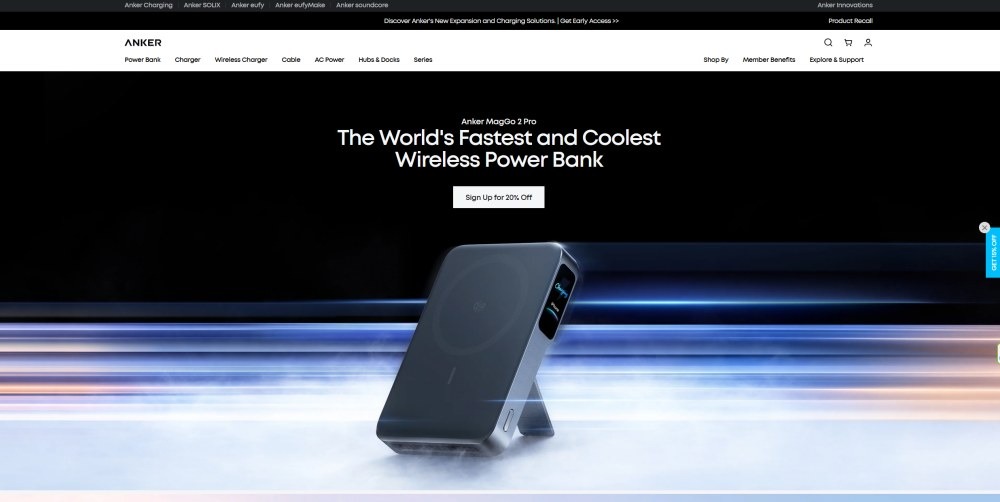
The company has built a broad product ecosystem around one of the most common needs in modern electronics: keeping devices powered and connected. Instead of offering only one type of accessory, its portfolio covers solutions for smartphones, tablets, laptops, headphones, gaming devices, cameras, and many other USB-powered products.
This makes the range relevant to many different types of shoppers. Someone looking for a compact phone charger has very different requirements from a laptop user who needs a docking station or a household looking for a larger portable power solution.
This guide covers the major product categories, popular product lines, buying considerations, and ways to choose the right solution without paying for features you do not need.
Shop Anker by Category
Anker
Explore the full range of charging, power and connectivity products.
Power Banks
Portable battery solutions for phones, tablets and other devices.
Chargers
USB-C, GaN and multi-port charging solutions for everyday use.
Wireless Chargers
Convenient wireless charging products for compatible devices.
AC Power
Portable power stations and larger energy solutions.
Hubs & Docks
USB-C hubs and docking products for computers and peripherals.
Cables
Charging and data cables for phones, computers and accessories.
About Anker
The brand is primarily associated with consumer electronics accessories rather than smartphones, computers, or other core devices. Its products are designed to complement the technology people already own.
Charging has become increasingly important as modern households use several electronic devices every day. A phone, tablet, laptop, smartwatch, headphones and other accessories may all need regular charging, creating demand for compact multi-port adapters, wireless solutions and portable batteries.
Connectivity is another important part of the product range. USB-C hubs and docking stations can add ports to modern laptops while helping users create cleaner home-office and desktop setups.
Why Choose Anker?
One of the main advantages of choosing a specialist accessory brand is the variety of available configurations. You can select a compact charger for travelling, a multi-port adapter for several devices, or a larger power solution for outdoor use.
Another advantage is the broad selection of USB-C products. As USB-C becomes increasingly common across phones, tablets, laptops and accessories, compatible charging and connectivity products can make it easier to manage multiple devices.
Versatility is one of the strongest reasons to consider this product range. There are solutions for simple everyday charging as well as more demanding laptop, desktop and portable-power setups.
Chargers
Chargers are one of the most popular categories. Options range from compact single-port adapters to models with several ports and higher power output.
Before buying, consider how many devices you normally charge and what type of power they require. A phone-only setup does not necessarily need the same charging capacity as a laptop and smartphone combination.
Multi-port models can be especially convenient when several devices are used together. Instead of keeping separate adapters for every product, one suitable charger may be able to handle several compatible devices.
USB-C Chargers
USB-C is now widely used for both charging and connectivity. However, the presence of a USB-C connector does not automatically mean that every charger provides the same performance.
Check the supported wattage, charging protocols and port configuration before purchasing. This is particularly important when charging laptops or other devices with higher power requirements.
GaN Chargers
Gallium nitride, commonly abbreviated as GaN, is used in many modern compact charging products. The technology can allow manufacturers to create relatively small adapters capable of delivering substantial power.
This can make GaN particularly attractive for travellers and people who want one compact adapter capable of handling several compatible devices.
Power Banks
Portable batteries are useful whenever a wall outlet is unavailable. They can provide additional power during travel, commuting, outdoor activities, events, or long working days away from home.
Capacity is an important specification, but it should not be the only factor. Output power, charging speed, size, weight and port selection can have an equally important effect on the everyday experience.
A compact model may be more convenient for everyday carrying, while a larger capacity unit can make more sense for extended trips or situations where access to mains power is limited.
Wireless Chargers
Wireless charging can make everyday charging more convenient by reducing the need to repeatedly connect and disconnect a cable.
Wireless charging products are available in different formats, including pads, stands and multi-device solutions. The best option depends on where you plan to use it and which devices you want to charge.
Always check compatibility before purchasing, because charging standards and supported charging speeds vary between devices.
MagGo
MagGo products focus on magnetic wireless charging and related accessories. They can be particularly appealing to users who want a convenient charging setup with magnetic attachment.
Compatibility is especially important with magnetic accessories, so check the requirements of your particular device before buying.
Cables
Charging cables are easy to overlook, but they can have significant differences in charging capability and data-transfer performance.
Connector type alone does not tell you everything about a cable. If you need high-power charging or fast data transfer, check the specifications carefully.
USB-C Hubs and Docking Stations
Modern laptops often have fewer physical ports than older computers. USB-C hubs can solve this problem by adding connections for peripherals such as USB devices, displays, memory cards, Ethernet and other accessories.
A docking station can take this idea further by creating a central connection point for a desktop workspace. This can be especially useful for people who regularly connect a laptop to monitors, keyboards, mice, storage devices and networking equipment.
Before purchasing a hub or dock, make a list of the ports you actually need. Also check display resolution, refresh-rate support and compatibility with your computer.
AC Power and Portable Power Stations
Larger portable power products are designed for situations that require much more energy than a conventional phone power bank can provide.
These solutions can be useful for camping, outdoor activities, emergency preparedness and other situations where access to conventional mains power may be limited.
When comparing portable power stations, pay attention to capacity, continuous output, available outlets, charging methods, weight and portability.
Popular Anker Product Lines
Nano
Nano products emphasize compact size and portability. They can be a practical choice for people who want to minimize the amount of charging equipment they carry every day.
Prime
Prime products are aimed at users looking for more advanced charging and power capabilities. They can be particularly useful for people managing several devices.
MagGo
MagGo focuses on magnetic wireless charging and compatible accessories, making this range interesting for users who prefer a cable-free charging experience.
SOLIX
SOLIX represents larger energy and portable power solutions. These products are intended for substantially different use cases than compact phone chargers and power banks.
GaNPrime
GaNPrime products focus on compact high-output charging and can be useful when several devices need to be powered from a relatively small adapter.
Who Should Consider These Products?
The product range can appeal to many different types of users. It is especially relevant if you regularly carry several electronic devices or want to simplify your charging setup.
- Smartphone and tablet users who need additional charging options.
- Laptop owners looking for USB-C power solutions.
- Travellers who want fewer adapters in their luggage.
- Home-office users who need additional connectivity.
- People who frequently need portable battery power.
- Users building a multi-device charging station.
- Outdoor users interested in larger portable energy solutions.
Pros and Cons
Pros
- Broad range of charging and power accessories.
- Many compact charging options.
- Strong selection of USB-C products.
- Solutions for phones, tablets and laptops.
- Multiple power bank configurations.
- Wireless charging products.
- USB-C hubs and docking stations.
- Larger portable power solutions.
Cons
- The large product range can be confusing.
- Advanced models can cost more than basic alternatives.
- Not every charger is suitable for every device.
- Specifications need to be checked before buying.
- Large power stations are considerably less portable than power banks.
How to Choose the Right Product
Choosing a Charger
Begin by identifying the devices you want to charge. If you only need to power a phone, a compact adapter may be sufficient. If you also use a laptop or tablet, look for a higher-output model.
If you charge several devices at once, consider the number of ports and the total available power. This can be more important than choosing the smallest possible adapter.
Choosing a Power Bank
Think about where you will use the battery. Everyday users may prefer something compact and lightweight, while travellers may benefit from greater capacity.
Also compare output wattage and supported charging technologies if fast charging is important to you.
Choosing a Wireless Charger
Confirm that your device supports the relevant wireless charging technology. Then consider whether a flat pad, stand or multi-device design is more practical for your environment.
Choosing a USB-C Hub or Dock
Make a list of the peripherals you need before choosing a model. Common considerations include USB ports, video outputs, Ethernet, card readers and power delivery.
If you use an external display, pay particular attention to supported resolution, refresh rate and the capabilities of your laptop.
Choosing a Portable Power Station
Start with the devices you intend to power and estimate how much energy they require. Then compare capacity, output power, available connections, recharge options and overall portability.
How to Save Money
The easiest way to avoid overspending is to identify your actual requirements before shopping. A more powerful charger is not automatically better if your devices do not need the additional output.
The same principle applies to power banks, hubs and docking stations. Paying for ports or features you will never use does not necessarily provide better value.
Compare the exact model and its specifications rather than comparing products only by their family name. Products in the same range can have substantially different capabilities.
Are Anker Products Good Value?
Value depends on the product and the needs of the buyer. Basic charging accessories can be relatively affordable, while high-output adapters, docks and portable power products can represent a considerably larger purchase.
A higher-priced product may nevertheless offer good value if it replaces several separate accessories. For example, one multi-port charger can potentially simplify a setup that previously required several individual adapters.
The best approach is therefore to compare the features you actually need with the price of the specific model.
Anker vs. Other Charging Brands
The charging and accessories market includes specialist manufacturers as well as accessories sold directly by major device manufacturers.
A specialist range can offer more variety in port configurations, power levels, form factors and connectivity. Manufacturer-branded accessories can meanwhile be attractive when a buyer wants a straightforward solution designed around a particular device ecosystem.
When comparing products, focus on charging power, compatibility, ports, size, portability and price rather than assuming that one brand is automatically superior in every category.
Third-Party Chargers vs. Manufacturer Chargers
Manufacturer chargers are often the simplest choice because they are designed around a particular device. However, users with several compatible products may find a multi-port third-party charger more convenient.
A single suitable USB-C adapter can sometimes power several devices, reducing the number of chargers required at home or while travelling.
Using Anker Products for Travel
Travel is one of the situations where compact charging accessories can be most useful. A small GaN adapter, suitable cables and a portable battery can reduce the amount of equipment required in your luggage.
If you travel internationally, remember that wall socket formats differ between countries. A plug adapter and a charger are separate considerations.
Using Anker Products in a Home Office
A well-chosen charging and connectivity setup can help reduce cable clutter on a desk. USB-C chargers can handle compatible devices, while hubs and docks can provide convenient connections for monitors and peripherals.
The ideal configuration depends on the computer and accessories being used. Always check compatibility before buying a dock or hub.
Where to Buy Anker Products
When shopping, compare the exact model, specifications and current price rather than choosing solely by product name. This is particularly important because chargers, batteries, hubs and power stations can differ substantially in their capabilities.
Frequently Asked Questions About Anker
Is Anker a good brand?
The brand offers a broad selection of charging, power and connectivity accessories. Whether a particular product is right for you depends on its specifications and your device requirements.
What is Anker best known for?
It is particularly well known for chargers, power banks, wireless charging products, cables, USB-C hubs and portable power solutions.
Are Anker chargers good?
There are many different charger models available. The best choice depends on required power output, ports, charging standards and the devices being charged.
Are Anker USB-C chargers good for laptops?
Some models are designed for higher-power devices such as laptops. Check the required wattage and charging specifications of your computer.
Are GaN chargers worth it?
GaN technology can be useful when you want substantial charging power in a relatively compact form factor, especially for travel.
Which Anker power bank should I buy?
Consider capacity, output power, size, weight, charging speed and the devices you intend to charge.
Are Anker power banks safe?
Use batteries according to the manufacturer’s instructions and avoid damaged batteries, cables or charging equipment.
Does Anker make wireless chargers?
Yes. The company offers wireless charging products, including products in its MagGo range.
What is MagGo?
MagGo is a range focused on magnetic wireless charging and compatible accessories.
Does Anker make USB-C hubs?
Yes. There are USB-C hubs with different combinations of ports and connectivity options.
Are Anker docking stations good for home offices?
A suitable docking station can simplify a desktop setup by providing connections for multiple peripherals. Compatibility should be checked before purchase.
Does Anker make charging cables?
Yes. The range includes charging and data cables in different formats and specifications.
Are all USB-C cables the same?
No. USB-C describes the connector format, while cables can differ in charging power, data-transfer performance and other capabilities.
What is Anker SOLIX?
SOLIX is associated with larger energy and portable power solutions, rather than conventional small charging accessories.
Is Anker good for travel?
Compact chargers, cables and portable batteries can be particularly useful for travellers who want to reduce the amount of equipment they carry.
Can one Anker charger charge multiple devices?
Some multi-port models can charge several compatible devices at once. Check the total output and individual port specifications.
Can Anker chargers charge MacBooks?
Compatible USB-C models can be suitable for laptops that support USB-C charging, provided the output meets the computer’s requirements.
Can Anker chargers charge iPhones?
Compatible charging products can be used with supported iPhone configurations. Check the cable and charging requirements for the specific model.
Can Anker power banks charge phones quickly?
Some models support higher output and fast-charging technologies. Compatibility between the battery and phone should be checked.
Are Anker products expensive?
Prices vary significantly between categories. Basic accessories can be affordable, while advanced chargers, docks and portable power products can cost more.
How can I save money on Anker products?
Compare the exact models, identify the features you actually need and compare current prices before purchasing.
Is Anker better than generic chargers?
The answer depends on the individual product. Compare specifications, compatibility, features and price instead of relying only on the brand.
Should I buy an Anker charger or a manufacturer charger?
Both can be suitable. A manufacturer charger may be convenient for one device, while a multi-port solution can be more practical for several compatible devices.
Is Anker worth it?
It can be worth considering if you need charging, connectivity or portable power products and the selected model provides the features and performance you actually require.
Ready to Shop Anker?
Explore chargers, power banks, wireless charging products, cables, USB-C hubs, docking stations and portable power solutions to find the right products for your setup.
Some links may earn us a commission.