
Microsoft: Windows, Surface, Xbox & More
Explore Microsoft products and services including Surface laptops, Windows PCs, Xbox gaming, Microsoft 365, accessories and other technology for work, study, entertainment and everyday use.
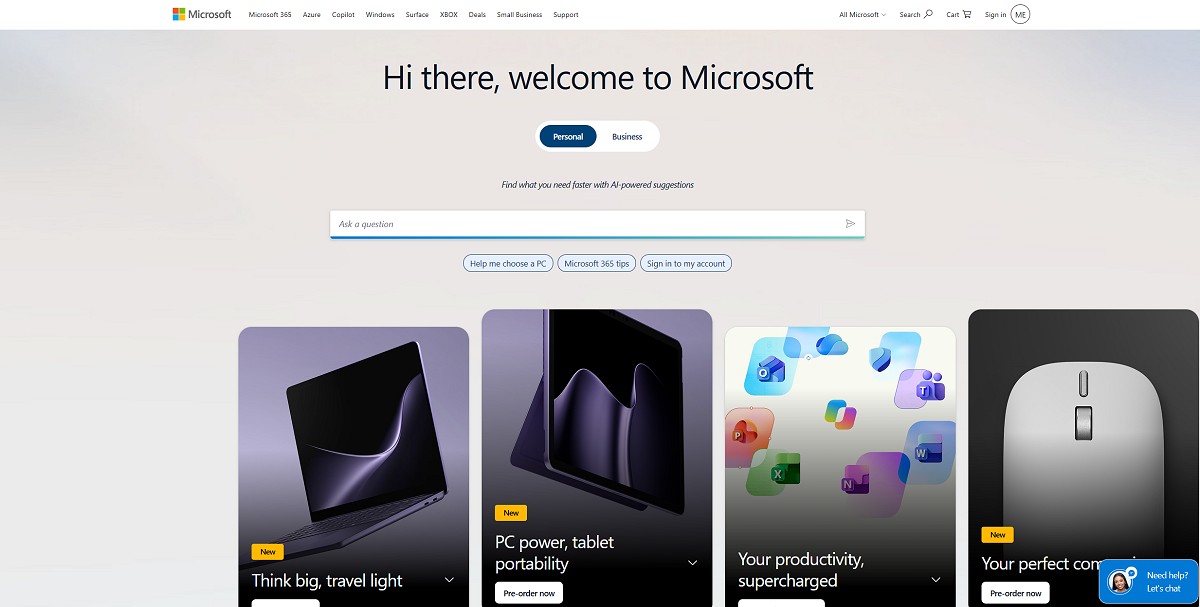
Some links may earn us a commission.
A broad technology ecosystem for work, gaming and everyday computing. Microsoft’s product portfolio covers personal computers, productivity software, gaming, accessories and services. From Surface laptops and Windows PCs to Xbox consoles and Microsoft 365, there are products and services for many different types of users.
Shop Microsoft by Category
Surface
Explore Surface laptops, 2-in-1 devices and portable computers for work, study and everyday use.
Shop Surface →Windows PCs
Discover Windows devices and tools for productivity, entertainment, communication and everyday computing.
Explore Windows →Xbox
Explore Xbox consoles, games, controllers and accessories for home gaming and entertainment.
Shop Xbox →Microsoft 365
Explore productivity applications and services including Word, Excel, PowerPoint, Outlook and cloud storage.
Explore Microsoft 365 →Accessories
Find keyboards, mice, webcams, headsets and other accessories for computers and workspaces.
Shop Accessories →Business
Explore devices, software and technology solutions designed for professional and business environments.
Explore Business →Software
Discover Windows, productivity applications, security tools and other software products.
Browse Software →PC Gaming
Explore PC gaming products, games, accessories and software for Windows gaming setups.
Explore PC Gaming →About Microsoft
Microsoft is a global technology company with products and services spanning personal computing, productivity, gaming, cloud computing and business technology. Its consumer portfolio includes Surface devices, Windows, Xbox and a wide selection of accessories and software.
The ecosystem covers several different types of users. Students and home users may be interested in Surface computers and Microsoft 365, while professionals can combine Windows PCs, productivity applications, accessories and cloud services into a complete workspace.
Gaming is another major part of the ecosystem. Xbox consoles, games, controllers and related services provide options for players who prefer console gaming, while Windows supports a broad range of PC gaming hardware and software.
Because the product range is extensive, it makes sense to start with the type of device or service you need and then compare individual products based on specifications, compatibility, features and price.
Surface Laptops and Devices
Surface is the hardware family designed around portable personal computing. The range includes laptops and flexible devices intended for different combinations of portability, productivity and performance.
Surface laptops can be suitable for everyday computing, professional work, education and communication. When comparing models, consider the screen size, processor, RAM, SSD storage, battery life, weight and available connectivity.
Users who travel frequently may prioritize a lightweight design and long battery life, while people who spend most of their time at a desk may place more importance on screen size, ports and performance.
Some Surface devices also provide touchscreen functionality and flexible form factors. These features can be useful for note-taking, presentations, browsing and other interactive tasks.
What to Consider When Choosing a Surface Device
- Processor and overall performance
- RAM capacity
- SSD storage
- Screen size and resolution
- Battery life
- Weight and portability
- Available ports and connectivity
- Keyboard and touchpad design
Windows PCs
Windows is the operating system behind a huge range of laptops, desktops and other compatible computers. It supports applications for productivity, education, communication, creative work, entertainment and gaming.
When choosing a Windows computer, the operating system is only one part of the decision. Processor performance, RAM, storage, display quality, graphics hardware, connectivity and physical design all influence how suitable a particular computer will be.
A computer intended mainly for documents, web browsing and video calls can have very different requirements from a system used for video editing, software development or demanding games.
Choosing a Windows Computer
Start by identifying the applications and tasks you use most often. For everyday productivity, a balanced configuration with sufficient RAM and SSD storage may be appropriate. More demanding workloads may require a faster processor, additional memory or dedicated graphics.
Display size and portability should also be considered. A compact laptop can be convenient for travel, while a larger display may be more comfortable for multitasking at home or in an office.
Xbox Gaming
Xbox is the gaming ecosystem covering consoles, games, controllers, accessories and related services. It provides options for players who prefer console gaming as well as users who combine gaming hardware with Windows PCs.
When choosing an Xbox setup, consider the games you want to play, available storage, display capabilities and whether you need additional controllers or other accessories.
The television or monitor can also influence the gaming experience. Features such as refresh rate, resolution, HDR, HDMI connectivity and variable refresh rate support may be relevant when selecting a display.
Accessories can further expand a gaming setup. Headsets, additional controllers, charging solutions and other peripherals can be useful depending on how you play.
Microsoft 365
Microsoft 365 brings together productivity applications and services used for documents, spreadsheets, presentations, email, communication and cloud storage.
Applications such as Word, Excel, PowerPoint and Outlook are widely used for school, home and professional tasks. Cloud storage can make it easier to access files across compatible devices and work from different locations.
Collaboration features can also be useful when several people need to work with the same documents or communicate as part of a project.
Before choosing a subscription, compare the applications, storage, number of users and other features included in the specific plan. Different plans are designed for different types of customers and use cases.
Microsoft 365 for Work
Professional users may use Word for documents, Excel for spreadsheets and analysis, PowerPoint for presentations and Outlook for email and scheduling. The combination can provide a central productivity environment for many office tasks.
Microsoft 365 for Home and Study
Students and home users can use the same applications for assignments, personal documents, household planning, presentations and communication. Cloud storage can also make files easier to access across multiple devices.
Accessories
Accessories can turn a laptop or desktop into a more complete workspace. Keyboards, mice, webcams, headsets, docking solutions and other peripherals can improve comfort and expand the capabilities of a computer.
Compatibility is particularly important when choosing accessories. Check the available ports, operating system support, wireless standards and compatibility with the device you already own.
For home offices, an external keyboard, mouse, monitor and docking solution can provide a more comfortable setup when working from a laptop. A webcam or headset may also be useful for frequent video meetings.
Gaming users may have different priorities. A suitable headset, controller, keyboard, mouse or display can be selected according to the games and devices being used.
Business Technology
Business users can choose from a broad range of devices, software and services designed for professional environments. Surface hardware can be combined with Windows, Microsoft 365 and compatible accessories to create flexible workstations.
For professional use, factors such as security, manageability, portability, battery life, connectivity and compatibility with existing business software can be particularly important.
Businesses should also consider how individual devices fit into their existing infrastructure before choosing specific hardware or software solutions.
A small business may prioritize simple deployment and productivity applications, while a larger organization may need more extensive device management, security and collaboration capabilities.
PC Gaming
PC gaming combines Windows computers with games, displays and accessories designed for interactive entertainment. Hardware requirements vary significantly between games, so it is important to check the specifications recommended for the titles you intend to play.
A gaming PC may benefit from a dedicated graphics processor, sufficient RAM, fast storage and a high-refresh-rate display. The processor and cooling system can also influence performance in demanding applications.
Accessories such as gaming keyboards, mice, headsets and controllers can complete a gaming setup depending on the type of games you play.
A gaming monitor should be selected according to the graphics capabilities of the computer. Higher resolution and refresh rates can require more graphics performance, so it is useful to consider the complete system rather than choosing a display independently.
Software and Productivity
Software remains an important part of the Microsoft ecosystem. Windows provides the operating environment, while applications such as Word, Excel, PowerPoint and Outlook support common productivity tasks.
Depending on your needs, you may use these tools for school assignments, business documents, financial spreadsheets, presentations, email, calendars and personal projects.
When choosing software, consider the applications you actually need and whether you require local installation, cloud access, collaboration features or support for multiple users.
How to Choose the Right Microsoft Product
The broad product ecosystem means that the best starting point is to identify what you actually need the device or service to do.
For School and Study
A lightweight laptop or another Windows computer can provide a practical setup for documents, research, video calls and online learning. Battery life, weight and keyboard comfort can be especially important for students who carry a computer throughout the day.
For Professional Work
Consider the applications you use, required processing power, memory, storage and connectivity. A laptop combined with an external monitor and accessories can provide a flexible home or office workstation.
For Gaming
Consider whether you want a console or Windows gaming PC. For PC gaming, graphics hardware and display specifications deserve particular attention. For console gaming, storage, display compatibility and available accessories are important considerations.
For Productivity
Microsoft 365 can provide applications and services for documents, spreadsheets, presentations, email and cloud storage. Compare the available plans according to the number of users and features you need.
For a Flexible Home Office
A portable computer can be combined with a larger external display, keyboard, mouse and other accessories. This allows one device to serve as both a mobile computer and a more traditional desktop workstation.
What to Consider Before Buying
Product names alone do not tell the entire story. Hardware configurations can vary significantly between models, even within the same product family.
For computers, compare the processor, RAM, SSD capacity, display, battery information, weight and available ports. For gaming hardware, pay particular attention to graphics capabilities and display compatibility.
For software and subscriptions, check exactly what is included in the selected plan, how many users are supported and which services or applications are available.
It is also worth considering compatibility with products you already own. A suitable dock, monitor, keyboard or other accessory can sometimes make a bigger difference to everyday use than upgrading the main device alone.
Check the Exact Configuration
Two products with similar names can have different processors, memory, storage or displays. Always review the complete specification before purchasing rather than relying only on the product family name.
Consider Your Future Needs
If you expect to keep a computer for several years, consider whether the memory, storage and performance will remain suitable as your software and workload requirements change.
Check Compatibility
Before buying accessories or peripherals, confirm that they work with your computer, console or other device. Ports, wireless standards and operating system compatibility can all affect whether an accessory is suitable.
Building a Complete Microsoft Setup
The different parts of the ecosystem can be combined to create a complete technology setup. A Surface laptop can be paired with an external monitor, keyboard, mouse and other accessories for a home office.
A gaming setup can combine an Xbox console or Windows PC with a suitable display, controller, headset and other peripherals. Microsoft 365 can then provide productivity tools across compatible devices.
A student setup could combine a portable laptop with Microsoft 365 and accessories such as a mouse or external display. A professional workspace might add a docking solution, larger monitor and additional peripherals.
The right combination depends on your budget, daily activities and existing equipment. Start with the products that solve your main needs and add accessories or services where they provide practical benefits.
Frequently Asked Questions
What products does Microsoft make?
Microsoft offers Surface computers, Windows, Xbox consoles and games, accessories, productivity software, cloud services and business technology solutions.
What is Microsoft Surface?
Surface is a hardware product family that includes laptops and other portable computing devices designed for work, study, communication and everyday use.
What is Microsoft 365?
Microsoft 365 is a collection of productivity applications and services that can include Word, Excel, PowerPoint, Outlook and cloud storage, depending on the selected plan.
What is Xbox?
Xbox is Microsoft’s gaming ecosystem, including consoles, games, controllers, accessories and related services.
Can Microsoft products be used for business?
Yes. The company offers computers, software, productivity applications, cloud services and other technology designed for professional and business environments.
Are Surface devices suitable for students?
Surface devices can be used for school and university tasks such as documents, browsing, video calls and online learning. The appropriate model depends on required performance, screen size, weight and battery life.
What should I compare before buying a Microsoft device?
Compare the exact model, processor, RAM, storage, display, battery information, connectivity, operating system and included accessories. For gaming products, also consider display and graphics requirements.
What should I check before choosing Microsoft 365?
Compare the available applications, cloud storage, number of users, subscription terms and other features included in each plan.
Can Windows computers be used for gaming?
Yes. Windows supports a broad range of PC games and gaming hardware. The appropriate computer configuration depends on the requirements of the games you want to play.
What accessories can improve a computer setup?
Useful accessories can include keyboards, mice, monitors, webcams, headsets, docking solutions and other peripherals. The right choices depend on the device and how you use it.
Explore Microsoft Products
Explore Surface devices, Windows, Xbox, Microsoft 365, accessories and other technology products for work, study, gaming and everyday use.