
Samsung: TVs, Phones, Tablets & More
Explore Samsung TVs, smartphones, tablets, laptops, monitors, wearables and home technology. From Galaxy smartphones and Galaxy Tab tablets to OLED and QLED TVs, Samsung offers products across entertainment, communication, productivity and connected living.
Some links may earn us a commission.
Explore the Samsung Product Ecosystem
Samsung offers technology across several major categories, including smartphones, TVs, tablets, laptops, monitors, wearables and home appliances. Exploring the right category first can make it easier to compare features, specifications and prices.
Browse Popular Samsung Categories
Explore popular Samsung product categories for entertainment, mobile computing, communication, productivity and connected living.
Samsung Phones
Explore Galaxy smartphones for everyday communication, photography, entertainment and productivity.
Explore Phones →Samsung TVs
Browse Samsung TVs including OLED, Neo QLED, QLED and other displays for home entertainment.
Explore TVs →Samsung Tablets
Discover Galaxy Tab tablets for entertainment, productivity, note-taking, creativity and everyday use.
Explore Tablets →Galaxy Book
Explore Samsung laptops designed for portability, productivity, communication and connected workflows.
Explore Galaxy Book →Samsung Monitors
Browse monitors for gaming, productivity, creative work, entertainment and home offices.
Explore Monitors →Galaxy Watch
Explore Galaxy Watch devices for connected lifestyles, communication, fitness and everyday use.
Explore Watches →Galaxy Buds
Discover wireless earbuds for music, calls, travel, entertainment and everyday listening.
Explore Galaxy Buds →Home Appliances
Explore Samsung refrigerators, washers, dryers, cooking appliances and connected home products.
Explore Appliances →About Samsung
Samsung is a global technology brand with products spanning smartphones, televisions, tablets, laptops, monitors, wearables, audio products and home appliances. Its portfolio covers both personal technology and larger home entertainment and connected-home systems.
One of the distinctive features of Samsung’s product range is the number of categories available within the same ecosystem. A customer can use a Galaxy smartphone alongside a Galaxy Watch, Galaxy Buds, Galaxy Tab or Galaxy Book, while Samsung TVs and home appliances extend the ecosystem into the home.
Samsung’s product families are also organized around different types of users and use cases. Galaxy smartphones cover a broad range of configurations, while Galaxy Tab focuses on tablets and Galaxy Book covers portable computing.
In home entertainment, Samsung offers several TV technologies and screen sizes. The company also produces monitors for gaming, productivity and other applications.
Samsung Smartphones for Everyday Use
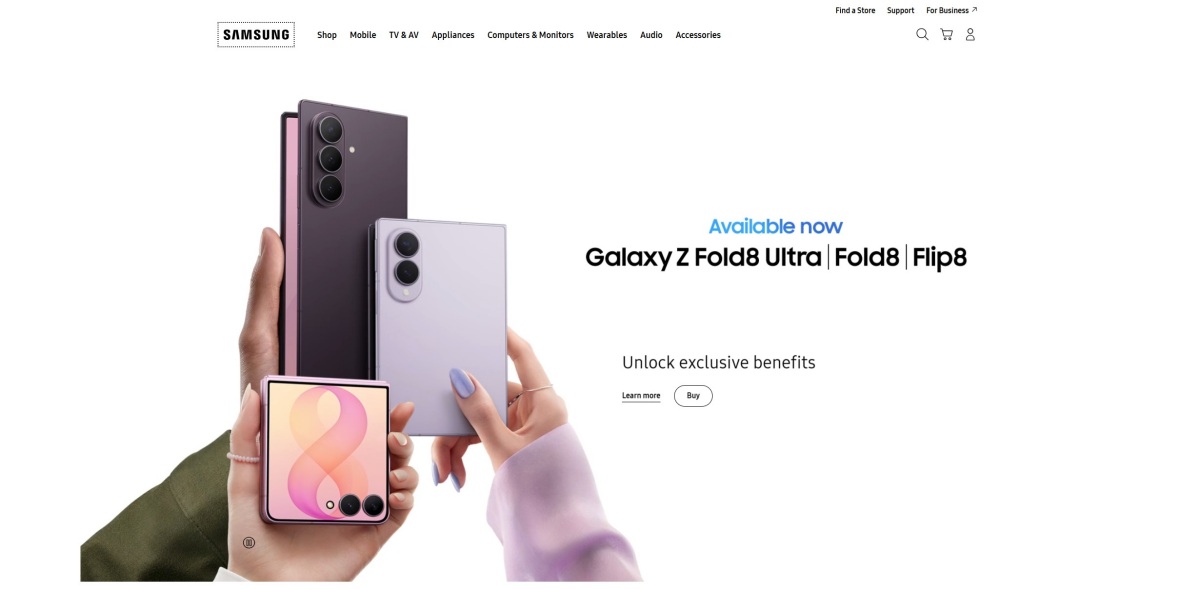
Galaxy smartphones are one of the most recognizable parts of Samsung’s technology portfolio. The range includes devices for everyday communication as well as higher-end models with advanced cameras, displays and performance.
When choosing a Samsung phone, consider the display, processor, camera system, storage, battery capacity, connectivity and overall size. The right combination depends on whether the phone is primarily used for communication, photography, gaming, work or entertainment.
The Galaxy ecosystem can also be relevant when choosing a smartphone. Users who already own Samsung wearables, earbuds, tablets or laptops may want to consider how easily the new device will work with their existing products.
Samsung TVs for Home Entertainment
Samsung offers televisions across a wide range of screen sizes and display technologies. TVs can be used for streaming, movies, sports, gaming and everyday television viewing.
When comparing Samsung TVs, consider screen size, resolution, display technology, brightness, contrast, image processing, smart features and connectivity.
OLED, Neo QLED and QLED models can have different characteristics, so shoppers should consider the type of content they watch and the room where the TV will be installed.
Gaming is another important consideration. Gamers should check refresh rate, input responsiveness, supported gaming features and the available HDMI connections before choosing a television.
Samsung Tablets for Entertainment and Productivity
Galaxy Tab tablets provide a portable alternative to both smartphones and traditional laptops. They can be used for streaming, browsing, reading, note-taking, communication, creative work and productivity.
Display size is particularly important when choosing a tablet. A larger screen can be useful for multitasking and productivity, while a smaller tablet may be easier to carry.
Users who plan to take handwritten notes or draw should also consider stylus compatibility and available accessories. Storage capacity and battery life are additional factors worth checking.
Galaxy Book Laptops
Samsung’s Galaxy Book range brings the Galaxy ecosystem into portable computing. These laptops are designed for users who want a lightweight computer for productivity, communication, browsing and everyday work.
When choosing a Galaxy Book, consider processor performance, memory, SSD storage, display quality, battery life, weight and connectivity.
Galaxy Book can be particularly relevant to people who already use other Samsung devices and want a more connected workflow between their phone, laptop and other Galaxy products.
Samsung Monitors for Work and Gaming
Samsung produces monitors for several different applications, including office productivity, gaming, entertainment and creative work.
Gaming monitor shoppers should consider refresh rate, response characteristics, resolution, adaptive synchronization and graphics compatibility.
Productivity users may place greater emphasis on screen size, resolution, ergonomics, connectivity and the ability to connect multiple devices.
Ultrawide and large-format displays can also be useful for users who regularly work with multiple applications or windows at the same time.
Galaxy Watch and Wearables
Galaxy Watch devices extend the Samsung ecosystem beyond the smartphone. They can provide access to notifications, communication, apps and other connected features directly from the wrist.
When comparing smartwatches, consider compatibility, display size, battery life, connectivity, comfort and the features that you actually plan to use.
Samsung also offers wireless earbuds and other wearable products that can complement a Galaxy smartphone or tablet.
Galaxy Buds and Wireless Audio
Wireless earbuds are useful for music, podcasts, calls, travel, work, gaming and everyday listening. Samsung’s Galaxy Buds range is designed to integrate with the wider Galaxy ecosystem.
When choosing wireless earbuds, consider fit, comfort, battery life, microphone performance, connectivity and noise cancellation features.
Users who frequently travel or work in noisy environments may place particular importance on active noise cancellation, while others may prioritize comfort and battery life.
Samsung Home Appliances
Samsung’s product portfolio extends beyond personal electronics into the home. The company offers refrigerators, washers, dryers, cooking appliances and other connected home products.
When choosing a home appliance, consider dimensions, capacity, energy consumption, installation requirements, connectivity and the features that are relevant to your household.
Smart features can also be useful for users who want to monitor or control compatible appliances through a connected home ecosystem.
Building a Samsung Ecosystem
One of the reasons shoppers may choose several Samsung products is the ability to build a connected technology setup around the Galaxy ecosystem.
A smartphone can serve as the central device, while a Galaxy Watch provides wearable access, Galaxy Buds provide wireless audio, a Galaxy Tab can offer a larger portable display and a Galaxy Book can provide a traditional laptop experience.
Samsung TVs and home appliances can extend the connected experience into the home. Before building an ecosystem, however, it is worth considering which integrations you will actually use rather than buying products simply because they belong to the same brand.
Choose Products Around the Way You Use Technology
A connected ecosystem can be useful, but individual product requirements should come first. Consider the features, compatibility, size, performance and price that matter most for each device before expanding your setup.
How to Choose the Right Samsung Product
Samsung offers products for many different uses, so the easiest way to begin is to identify the category that matches your main requirement.
For Mobile Users
Smartphone shoppers should compare display quality, camera capabilities, processor performance, battery life, storage and overall size. Existing Galaxy users may also want to consider compatibility with their other Samsung devices.
For Home Entertainment
TV shoppers should consider screen size, viewing distance, display technology, brightness, picture processing, smart features and gaming compatibility.
For Productivity
Laptop and tablet shoppers should consider portability, display quality, processor performance, memory, storage, battery life and connectivity.
For Gaming
Gaming users should look at display refresh rate, resolution, response characteristics, graphics performance and connectivity. A gaming monitor or TV should also be matched to the capabilities of the computer or console.
For a Connected Home
Users interested in smart home technology should consider compatibility, installation requirements, connectivity and whether the connected features provide practical benefits for their household.
What to Look For When Buying Samsung Electronics
Samsung products vary considerably between categories, so specifications should always be evaluated in the context of how the product will be used.
- Display: Consider size, resolution, panel technology, brightness, contrast and refresh rate.
- Performance: Choose processor and hardware capabilities according to the applications and tasks you use.
- Battery: Portable devices should be evaluated for battery capacity and expected everyday endurance.
- Storage: Consider how much space you need for applications, photos, videos, games and other data.
- Connectivity: Check wireless standards, ports and compatibility with other devices.
- Comfort: Size, weight and ergonomics can be important for products used for extended periods.
- Compatibility: Check whether the product works with your existing devices and operating systems.
- Total Cost: Consider accessories and other equipment that may be required to complete your setup.
Frequently Asked Questions About Samsung
What is Samsung best known for?
Samsung is widely known for smartphones, televisions, displays, tablets, laptops, wearables, audio products and home appliances.
What are Samsung Galaxy phones?
Galaxy is Samsung’s main family of mobile devices and includes smartphones across different configurations and price ranges.
Does Samsung make OLED TVs?
Yes. Samsung offers OLED televisions alongside other display technologies, including QLED and Neo QLED.
Are Samsung TVs good for gaming?
Samsung offers TVs with gaming-oriented features such as high refresh rates and gaming connectivity. Before buying, check the specifications of the specific model and match them to your gaming hardware.
What is Galaxy Book?
Galaxy Book is Samsung’s laptop family, designed for portable computing, productivity and integration with other Galaxy devices.
Does Samsung make tablets?
Yes. Samsung’s Galaxy Tab range includes tablets designed for entertainment, productivity, note-taking, communication and creative work.
Does Samsung make smartwatches?
Yes. Galaxy Watch devices provide smartwatch functionality and are designed to work as part of the broader Galaxy ecosystem.
What are Galaxy Buds?
Galaxy Buds are Samsung’s wireless earbuds designed for music, calls, entertainment and everyday listening.
Does Samsung make monitors?
Yes. Samsung offers monitors for gaming, productivity, entertainment and other applications, including large-format and ultrawide displays.
What should I consider before buying a Samsung product?
Start with your main use case and then compare display quality, performance, battery life, storage, connectivity, compatibility, comfort and total cost.
Where can I shop for Samsung products?
Samsung products are available through the official Samsung Store as well as retailers and other sellers. Comparing configurations and prices can help you find an option that matches your requirements.
Ready to Explore Samsung?
Explore Samsung TVs, smartphones, tablets, Galaxy Book laptops, monitors, wearables and home technology and build a setup around the way you use your devices.